

Your Home Looks Fine
After the Storm.
But Is Water Damage Hiding?
Water damage isn't always obvious. Learn how water travels through your home, what signs to look for, and what steps to take after heavy rain.
Why Water Damage Isn't Always Easy to See
After a heavy storm, it's natural to look for the obvious: a leaking ceiling, a puddle near the window, or a wet patch on the floor. But water doesn't always leave evidence where it first enters your home.
A small opening around roof flashing, for example, can allow rainwater to travel along framing before eventually appearing as a stain on a ceiling or wall. By the time that discoloration becomes visible, moisture may have already reached materials beyond the stained area.
That's why the location of a water stain doesn't necessarily tell you where the leak began or how far the moisture has traveled.
The visible damage is not always the full extent of the damage. Finding the source of moisture matters just as much as repairing the affected surface.
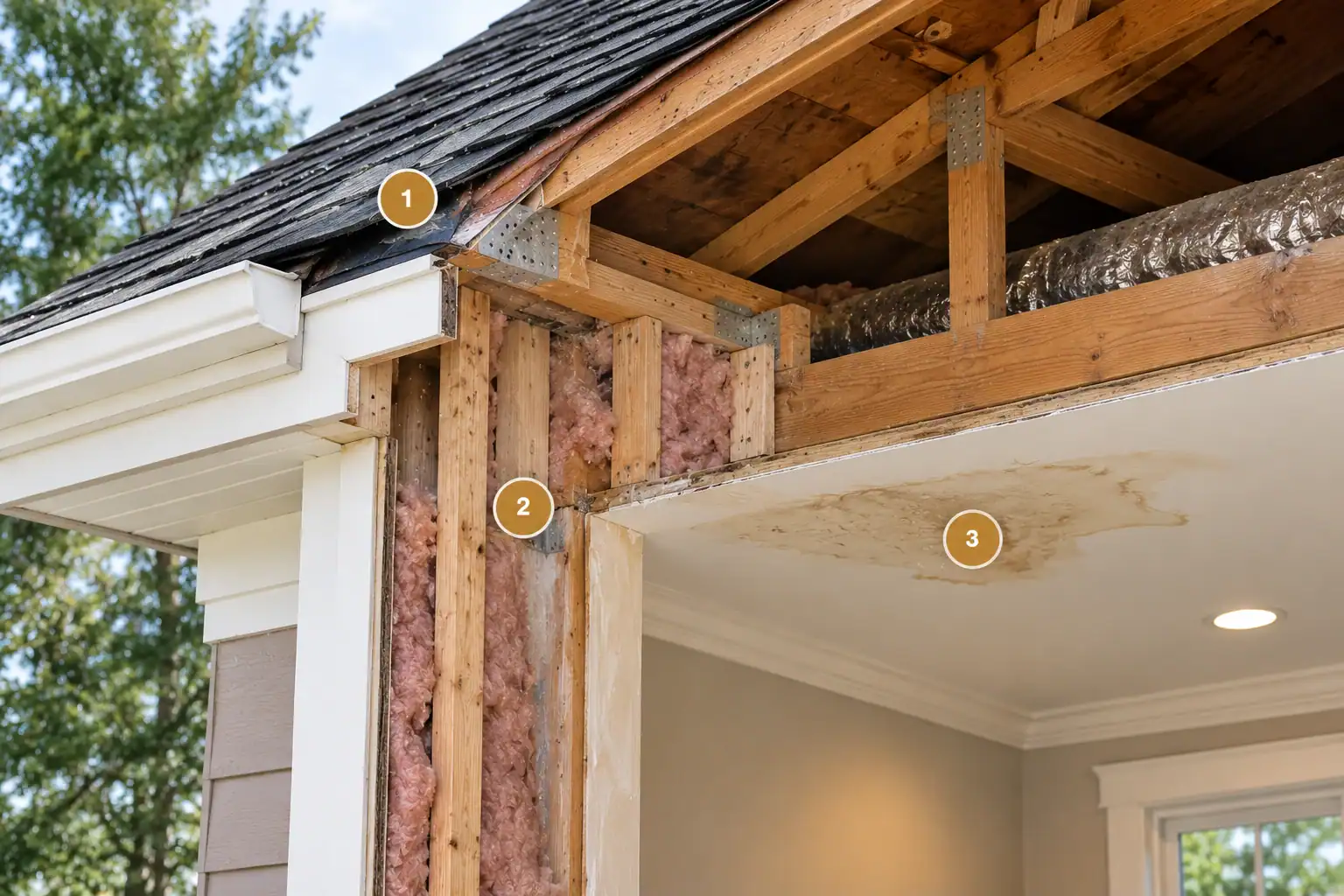
Entry point Water may enter through damaged roofing or exterior openings.
Travel path Moisture can follow framing and concealed surfaces.
Visible damage A stain may appear some distance from the original opening.
Where Water Can Hide Inside Your Home
Some of the most concerning moisture problems develop in places homeowners rarely see. After prolonged or wind-driven rain, these areas deserve a closer look.
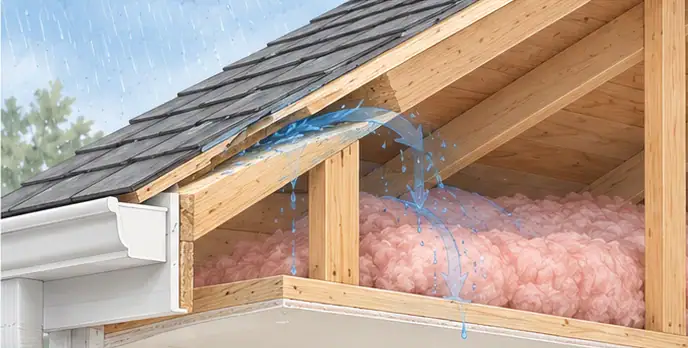
Attic and roof structure
Roof leaks can affect insulation, roof sheathing, and framing before water reaches the living space. A ceiling may look normal even when moisture is present above it.
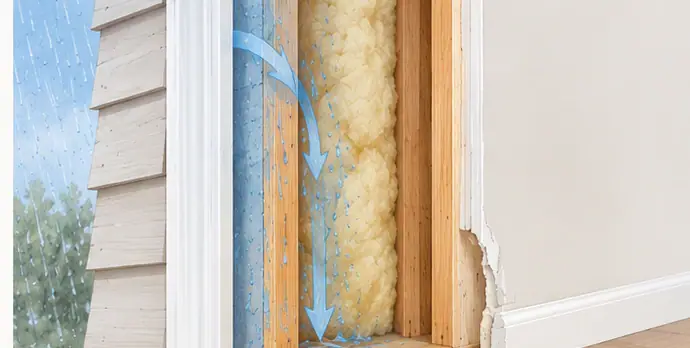
Behind walls
Water entering around exterior openings can move into wall cavities. Drywall may not immediately show signs of moisture.
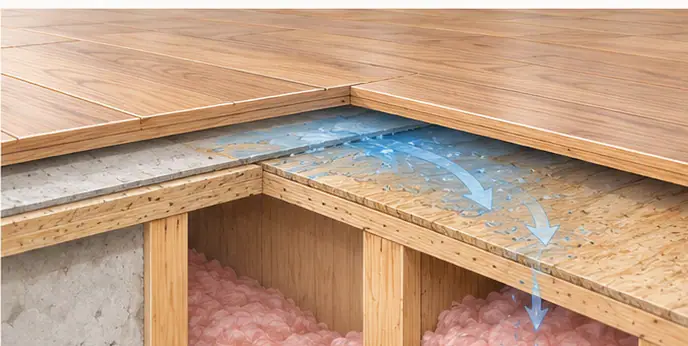
Under flooring
Moisture can become trapped beneath flooring. Changes may appear later as swelling, separation, or warping.
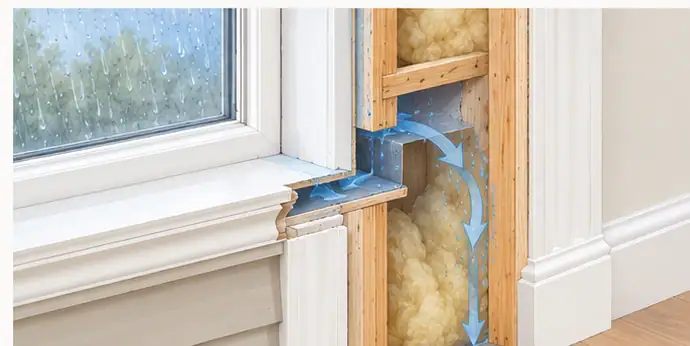
Around windows and doors
Wind-driven rain can expose weaknesses around exterior openings. Damaged sealants or flashing may allow water to reach surrounding materials.
Subtle Signs That Often Get Overlooked
Water damage doesn't always announce itself with a major leak. Sometimes the first indication is a small change that seems easy to dismiss.
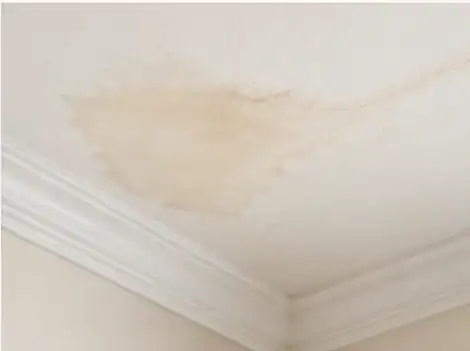
Slight discoloration
A faint yellow or brown mark may indicate moisture has reached the surface.
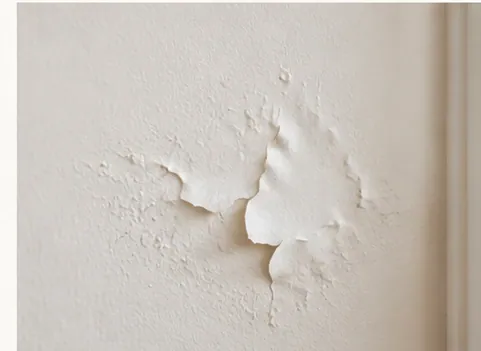
Peeling or bubbling paint
Moisture can weaken the bond between paint and the surface beneath it.
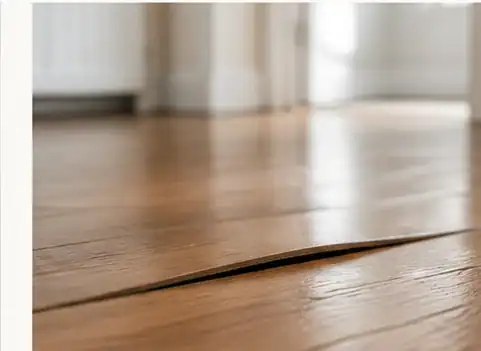
Changes in flooring
New gaps, raised edges, or boards that no longer sit flat can indicate moisture-related movement.
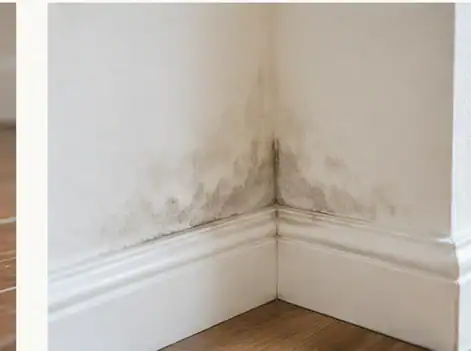
A persistent musty odor
A damp smell may indicate lingering moisture even when surfaces appear dry.
These signs can have more than one cause. They don't automatically confirm hidden water damage, but they can help identify areas that deserve further evaluation.
What Should You Do If You Suspect Water Damage?
Finding a suspicious stain or damp area doesn't necessarily mean major repairs are ahead. The important thing is to avoid overlooking a problem that may continue to develop.
Document what you see
Photograph the affected area before making changes. Record when you noticed it and whether it appeared during or after rainfall.
Avoid covering up the evidence
Painting over a stain or replacing a damaged surface before identifying the source can make it harder to understand what happened.
Have the affected area evaluated
When moisture may be concealed or damage continues to appear, a qualified professional can help determine the source and appropriate next steps.
Understand what repairs are actually needed
Once the source has been addressed, the next question is whether drying alone is sufficient or whether portions of the home need reconstruction.
When Drying Isn't Enough
Drying equipment can remove moisture, but it can't reverse every type of damage. The condition of the affected materials determines whether drying is sufficient or if repairs are needed to restore your home.
Drying May Be Enough
IN THESE SITUATIONS- Materials remain structurally sound.
- Moisture can be fully removed.
- No lasting material damage is found.
- The water source has been corrected.
Repairs May Be Necessary
COMMON EXAMPLES- ! Drywall has deteriorated or softened.
- ! Flooring has warped or separated.
- ! Insulation or other materials cannot be adequately dried.
- ! Concealed damage is discovered.
A dry home isn't necessarily a restored home.
The condition of the affected materials determines whether drying is sufficient or reconstruction is needed.
What If Insurance Is Involved?
If storm-related water damage may be covered by your homeowners insurance policy, documenting the damage early can help create a clearer record.
An insurance estimate may be prepared before every affected area is fully accessible. If additional damage becomes apparent during reconstruction, the original repair scope may need to be reviewed.
This is one reason a construction-focused assessment can be valuable. It helps homeowners better understand what work may be necessary to restore affected spaces.
Coverage depends on the policy and cause of damage. Flood damage is generally excluded from standard homeowners insurance policies.
Not Sure What Your Home Needs?
When water damage extends beyond surface repairs, understanding the reconstruction requirements is an important next step.
Sac Infill Construction works with homeowners on the rebuilding side of property damage, helping identify the construction work needed to restore affected spaces.
REQUEST AN ASSESSMENT →Frequently Asked Questions
Not every sign of moisture means extensive repairs are needed. Here are answers to some of the questions homeowners have when assessing possible water damage after a storm.
Can water damage be present even if my walls and ceilings look dry?
Yes. Moisture can remain behind drywall, beneath flooring, or inside insulation without immediately appearing on the surface. A professional may use moisture meters or other diagnostic equipment to check areas where water intrusion is suspected.
How long does it take for water damage to become a serious problem?
It depends on the materials, amount of water, and surrounding conditions. Mold can begin developing within 24–48 hours under favorable conditions, which is why prompt drying matters. Structural deterioration may take longer and isn't always immediately visible.
Can I just paint over a water stain once it's dry?
Only after the source of the water has been resolved and the affected materials have been properly evaluated. Painting too soon can conceal continuing moisture problems. Some stained surfaces may be suitable for refinishing, while others require replacement.
How do I know whether water-damaged drywall needs replacing?
It depends on the water source, how long the drywall was wet, and its condition after drying. Softened, crumbling, or contaminated drywall may need removal. Drywall that remains sound may sometimes be retained following proper assessment.
Does homeowners insurance cover water damage from heavy rain?
Coverage depends on how the water entered the home and the terms of your policy. Damage from certain sudden storm-related openings may be covered, while flooding and some forms of seepage are commonly excluded. Your insurer determines coverage under your policy.
What if my insurance estimate doesn't include all the necessary repairs?
If additional damage is discovered, document it before proceeding with repairs that would conceal the affected area. Your contractor can prepare a revised construction scope or supporting documentation for your insurer to review. Additional payment isn't guaranteed.